Waardenburg Syndrome Type 1 Coexisting with Unilateral Glaucoma: A Case Report
Article Sidebar
Main Article Content
Abstract
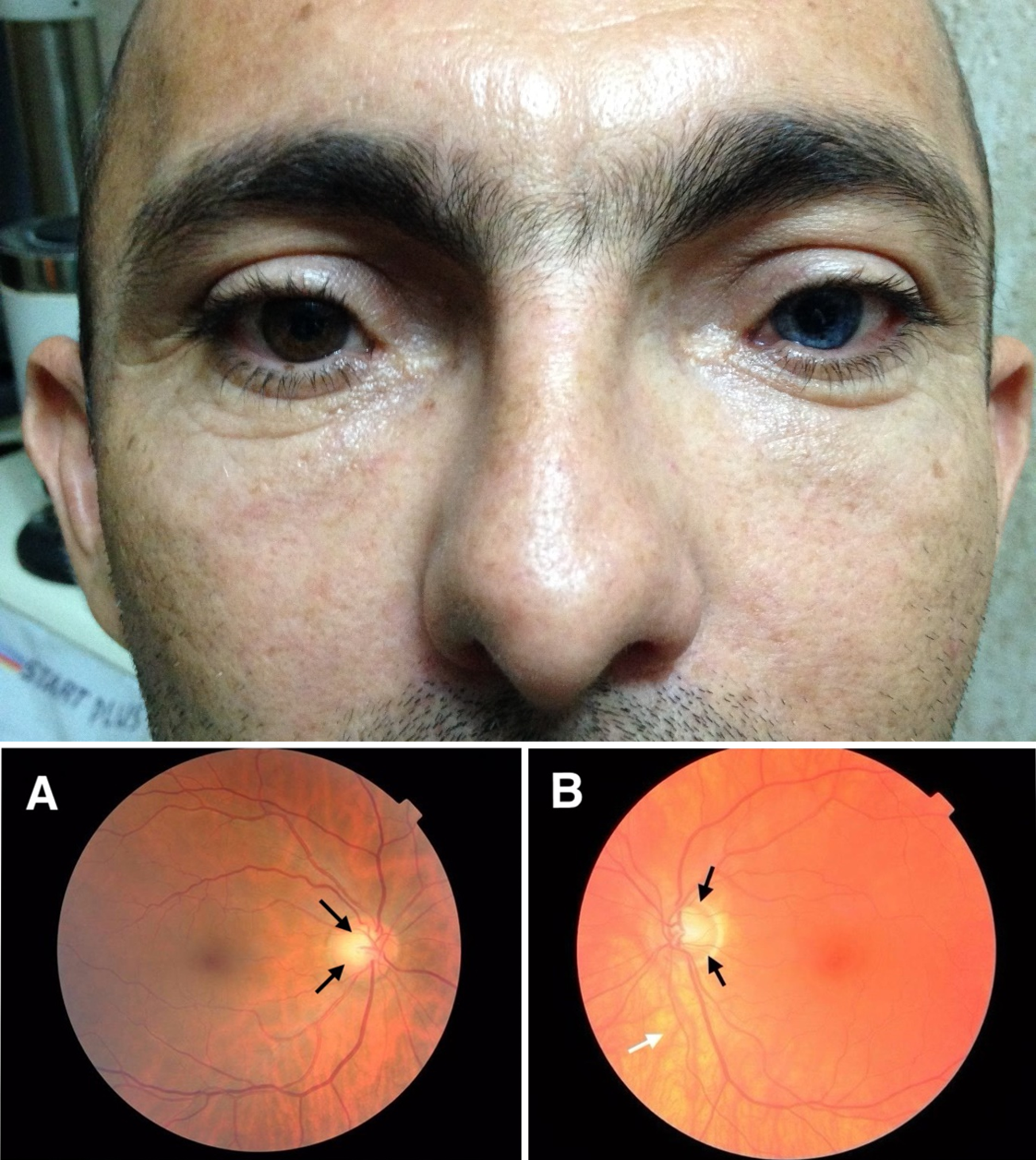
Waardenburg syndrome (WS) is a rare disorder of neural crest cell development classified into four main clinical and genetic phenotypes. The range and severity of associated symptoms and findings may vary greatly from case to case. There are few reports of WS associated with ocular disorders. Here, we describe a case of WS type1 combined with open-angle glaucoma and emphasize the importance of observation of comorbidities that can coexist with the syndrome. Early diagnosis and intervention can lead to better outcomes.
Article Details

This work is licensed under a Creative Commons Attribution 4.0 International License.
Authors retain the copyright of their articles and grant the journal the right of first publication under the Creative Commons Attribution (CC BY) license, which allows others to share and adapt the work with proper attribution.
References
Waardenburg PJ. A new syndrome combining developmental anomalies of the eyelids, eyebrowns and nose root with pigmentary defects of the iris and head hair and with congenital deafness. Am J Hum Genet. 1951;3(3):195-253.
Pingault V, Ente D, Dastot-Le Moal F, Goossens M, Marlin S, Bondurand N. Review and update of mutations causing Waar-denburg syndrome. Hum Mutat. 2010 Apr;31(4):391-406. doi: 10.1002/humu.21211.
Farrer LA, Grundfast KM, Amos J, Arnos KS, Asher JH Jr, Beighton P, Diehl SR, Fex J, Foy C, Friedman TB, et al. Waardenburg syndrome (WS) type I is caused by defects at multiple loci, one of which is near ALPP on chromosome 2: first report of the WS consortium. Am J Hum Genet. 1992 May;50(5):902-13.
Korday C, Bhaisara B, Shah D, Shinde S, Vasu NSK, Kumar S. Waardenburg Syndrome: a rare genetic disorder in four ge-nerations of a family. Int J Contemp Pediatr 2019;6:2733-7. doi: 10.18203/2349-3291.ijcp20194766.
Sun LH, Li XH, Shi J, Pang XH, Hu YC, Wang XW, Wu H, Yang T. Molecular etiology and genotype-phenotype correlation of Chinese Han deaf patients with type I and type II Waardenburg Syndrome. Sci Rep. 2016;6:35498. doi: 10.1038/srep35498.
Quigley H.A., Broman A.T. The number of people with glaucoma worldwide in 2010 and 2020. Br J Ophthalmol. 2006;90(3):262–267. doi: 10.1136/bjo.2005.081224.
Gupta V, Aggarwal HC. Open angle glaucoma as a manifestation of Waardenburg’s syndrome. Indian J Ophthalmol. 2000;48(1):49–50.
Abdelrahman AM, Amin RH. Juvenile open-angle glaucoma with Waardenburg syndrome: a case report. J Glaucoma. 2021;30(1):e1–4.
Zhang L, Wan Y, Wang N. Waardenburg syndrome type 4 coexisting with open-angle glaucoma: a case report. J Med Case Rep. 2022 Jul 6;16(1):264. doi: 10.1186/s13256-022-03460-1.
Pierre-Filho PTP, Pierre LL. Maculopatia simétrica bilateral e heterocromia na síndrome de Waardenburg. Rev Bras Oftalmol 2023;82:e0052. doi: 10.37039/1982.8551.20230052.
Buonfiglio PI, Izquierdo A, Pace MV, Grinberg S, Lotersztein V, Brun P, Bruque CD, Elgoyhen AB, Dalamón V. Comprehensive Approach for the Genetic Diagnosis of Patients with Waardenburg Syndrome. J Pers Med. 2024 Aug 27;14(9):906. doi: 10.3390/jpm14090906.
Liu XZ, Newton VE, Read AP. Waardenburg syndrome type II: Phenotypic findings and diagnostic criteria. Am J Med Genet. 1995;55(1):95-100. doi: 10.1002/ajmg.1320550123.
Delleman JW, Hageman MJ. Ophthalmological findings in 34 patients with Waardenburg syndrome. J Pediatr Ophthalmol Strabismus. 1978;15(6):341-5. doi: 10.3928/0191-3913-19781101-03.
Müllner-Eidenböck A, Moser E, Frisch H, Read AP. Waardenburg syndrome type 2 in a Turkish family: implications for the importance of the pattern of fundus pig mentation. Br J Ophthalmol 2001; 85: 1384 1386.
Chua SW, Mohd Khialdin, S, Mustapha M, Md Din N, Yong MH. Association of type II Waardenburg syndrome with hy-permetropic amblyopia. Int J Ophthalmol 2022;15(4):677-80.
Al-Najmi Y, Abdalla Elsayed MEA, Alsaggaf K, Alghamdi A, Albeedh M. Unilateral High Intraocular Pressure, Cataract, and Retinal Detachment in Waardenburg Syndrome. Case Rep Ophthalmol. 2023 May 12;14(1):203-208. doi: 10.1159/000529278.
Kadoi C, Hayasaka S, Yamamoto S. Branch retinal vein occlusion in a patient with Waardenburg syndrome. Ophthalmologica. 1996;210(6):354-7. doi: 10.1159/000310744.
Kavitha S, Gopalakrishna M. Waardenburg syndrome type 1 with unilateral glaucoma. Indian J Med Res. 2022 Jul;156(1):161. DOI: 10.4103/ijmr.ijmr_2594_20.
Al-Najmi Y, Abdalla Elsayed MEA, Alsaggaf K, Alghamdi A, Albeedh M. Unilateral High Intraocular Pressure, Cataract, and Retinal Detachment in Waardenburg Syndrome. Case Rep Ophthalmol. 2023 12;14(1):203-208. doi: 10.1159/000529278.
Nork TM, Shihab ZM, Young RS, Price J. Pigment distribution in Waardenburg's syndrome: a new hypothesis. Graefes Arch Clin Exp Ophthalmol. 1986;224(6):487-92. doi: 10.1007/BF02154734.