Inferior Vena Cava Mesenchymal Tumor with Intracardiac Extension Mimicking an Atrial Myxoma in a Young Adult: A Case Report
Article Sidebar
Main Article Content
Abstract
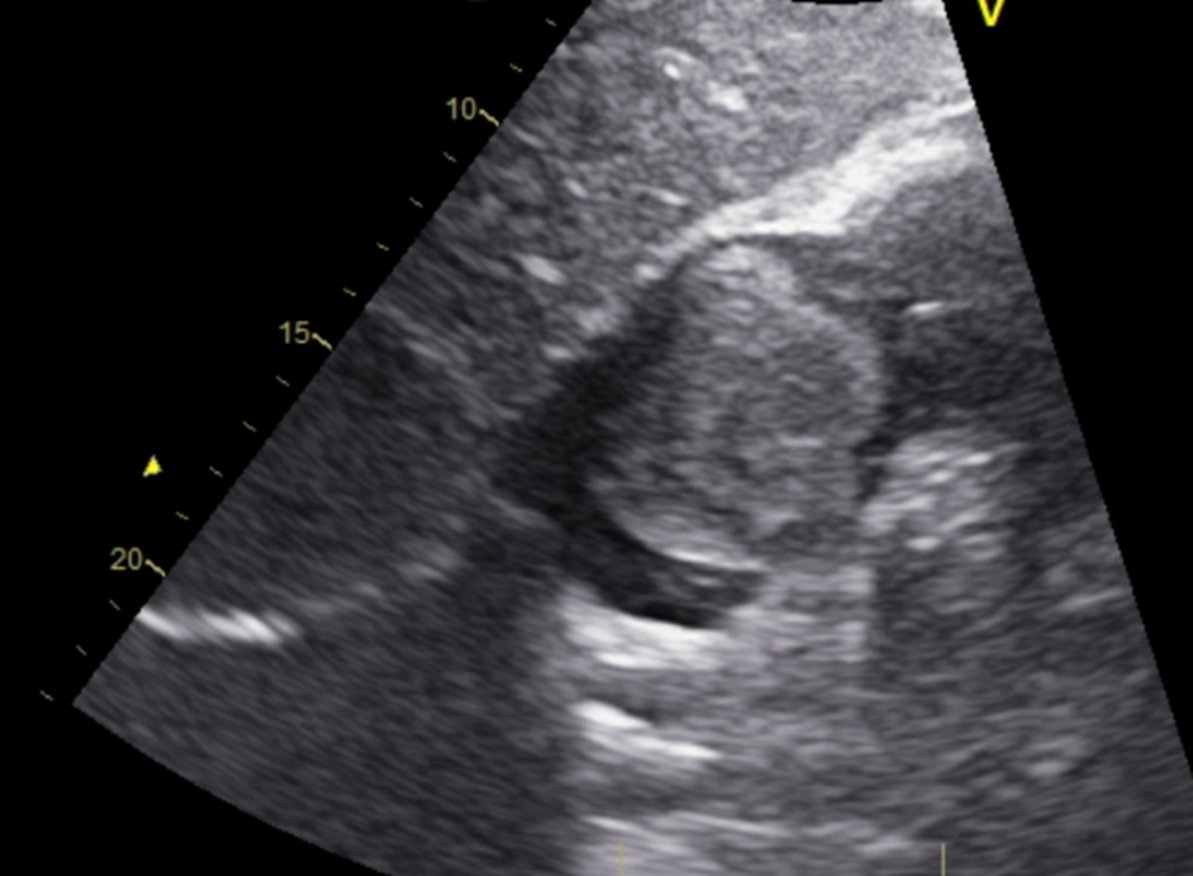
Mesenchymal tumors originating from the inferior vena cava with cranial extension into the right atrium are rare and may closely mimic primary cardiac tumors, particularly atrial myxoma, leading to diagnostic and surgical pitfalls. A 29-year-old previously healthy man was referred for cardiac surgery after a large right atrial mass was detected by transthoracic echocardiography and interpreted as an atrial myxoma. No preoperative cross-sectional imaging was performed. Intraoperatively, the lesion was identified as cranial extension of a tumor arising from the inferior vena cava, prompting partial intracardiac resection. Subsequent magnetic resonance imaging demonstrated a large infiltrative right retroperitoneal mass with extensive inferior vena cava tumor thrombosis. The patient underwent definitive staged multidisciplinary surgery including retroperitoneal tumor resection, inferior vena cava tumor thrombectomy, and caval reconstruction with a vascular graft. Histopathology demonstrated a smooth muscle neoplasm with cellular atypia, diffuse smooth muscle marker expression, Ki-67 labeling index of approximately 15%, and p53 positivity, without tumor necrosis or mitotic activity, supporting classification as a tumor of uncertain malignant potential. This case highlights the critical importance of systematic inferior vena cava assessment in patients presenting with right atrial masses, as misdiagnosis may lead to inadequate surgical planning and increased perioperative risk. It also illustrates the diagnostic complexity of vascular smooth muscle tumors with atypical features and underscores the need for complete surgical resection, long-term anticoagulation with rivaroxaban after caval reconstruction, and structured oncologic surveillance in tumors of uncertain malignant potential.
Article Details

This work is licensed under a Creative Commons Attribution 4.0 International License.
Authors retain the copyright of their articles and grant the journal the right of first publication under the Creative Commons Attribution (CC BY) license, which allows others to share and adapt the work with proper attribution.
References
Burke A, Virmani R. Tumors of the heart and great vessels. In: Rosai J, Sobin LH, editors. Atlas of Tumor Pathology. Wash-ington (DC): Armed Forces Institute of Pathology; 1996.
Reynen K. Cardiac myxomas. N Engl J Med. 1995;333(24):1610–1617.
Clay TD, Dimitriou J, McNally OM, et al. Tumors of the inferior vena cava: a review of pathology and management. Ann Surg Oncol. 2010;17(8):2069–2077.
Grebenc ML, Rosado-de-Christenson ML, Green CE, Burke AP, Galvin JR. Cardiac myxoma: imaging features in 83 patients. Radiographics. 2002;22(3):673–689.
Hines OJ, Nelson S, Quinones-Baldrich WJ, Eilber FR. Leiomyosarcoma of the inferior vena cava: prognosis and comparison with leiomyosarcoma of other anatomic sites. Cancer. 1999;85(5):1077–1083.
Mingoli A, Cavallaro A, Sapienza P, et al. International registry of inferior vena cava leiomyosarcoma: analysis of a world series on 218 patients. Anticancer Res. 1996;16(5B):3201–3205.
Fletcher CDM, Bridge JA, Hogendoorn PCW, Mertens F, editors. WHO Classification of Tumours of Soft Tissue and Bone. 4th ed. Lyon (France): IARC Press; 2013.
Bennani-Baiti IM, Bennani-Baiti N. Fumarate hydratase–deficient leiomyoma and leiomyosarcoma. Semin Diagn Pathol. 2016;33(4):229–234.